


 Print
Print


Southern African Natural Gas Advisory Service Service
Delivery of natural gas to consumers - local distribution
The final step
Local distribution is generally the last step in delivering natural gas regularly and reliably every hour of every day to customers. This important activity is typically done by local natural gas distribution companies or utilities.
As a general rule such local distribution entities are either companies owned by investors and shareholders; or, gas supply bodies owned by local councils, government or public bodies. Utilities have traditionally been viewed as monopolies due to the very high cost of infrastructure involved in local gas supply and the need to avoid wasteful duplication of such assets. Unlike many other services and types of enterprise, local gas supply is generally subject to certain regulatory and other obligations.
Local distribution utilities (LDU's) or companies (LDC's) usually transport natural gas that is delivered from the transmission network to delivery points that are referred to as city gate stations. The local utility take ownership and responsibility for the onward supply of natural gas from this point through the local gas distribution network to each customers meter.
In some cases very large users of natural gas such as power stations or big industrial customers will be supplied directly from the high pressure transmission network. However the vast majority of customers are supplied by the local gas distribution utility.
Local natural gas distribution networks
Natural gas supply utilities transport the gas through many thousands of miles of small diameter underground distribution pipe.
The gas is compressed at various points in this distribution network to ensure consistent pipeline flow. With lower volumes of gas being moved through smaller pipes than transmission networks, the pressure of the natural gas is lower. As little as 3 psi pressure is required to move gas through a local distribution network in contrast to 1,500 psi in some natural gas transmission pipelines.
The natural gas received at the city gate is reduced in pressure and is also often filtered to ensure minimum particulate and moisture content despite the gas already having been processed before dispatch from the gas production plant to the transmission network. The local distribution utility will also add mercaptan at this point to provide the familiar smell of natural gas (rotten eggs) for the detection of leaks and safety purposes
Distribution materials and methods
Historically rigid iron and steel pipe were used underground to build local gas distribution networks. Some of the oldest gas distribution networks such as those in London that used to carry Town Gas (manufactured from coal) were constructed with iron pipes that corroded underground over time. These iron and many steel underground pipes have long since been upgraded and replaced with pipes made from more durable materials. In recent years there has been a technological revolution in the methods and materials used to construct and maintain these underground supply systems.
By the 1990's, polyethylene plastic pipe (usually referred to as PE) has replaced steel in the vast majority of new underground gas mains and service lines to the customer's premises. A major focus of gas supply utilities has been to greatly increase the life expectancy of the pipe in the ground. Such modern materials and methods enable PE pipe to last for many decades to safely transport gas to end users.
The methods to construct these underground pipeline networks have also benefited hugely from new technology. New trenching techniques now enable the installation of distribution underground pipe work quickly and with minimum impact above ground. Guided drilling systems, large earth ploughs that rapidly lay PE pipe behind as they progress across open countryside; and, mole machines driven by compressed air that lay pipe work underground without the need for old fashioned trenching have all drastically reduced the cost, time and disruption when constructing natural gas supply pipeline networks.
The application of advanced technologies has also improved the ability of gas distribution companies to deliver natural gas in a cost effective way, when and where it is needed. The local delivery network is controlled by state of the art computerized operation centres that allow immediate response to seasonal, daily and even hourly swings in demand. Advanced computer programs have revolutionized the industry's customer service operations, making it possible to relay instantaneously to central control points the measurement data from many delivery and receipt points in the distribution network.


Cost of natural gas supply
The use of plastic pipe, new computer mapping systems, nondestructive testing technology, smart pipeline inspection and repair techniques, advanced gas main laying methods; and, a range of other modern developments have all made a significant contribution to the safe and cost effective supply of natural gas. Despite these continuing efficiency improvements, due to the infrastructure required for the convenient 'on tap' supply of natural gas to many smaller and diverse customers across large areas, the cost of natural gas distribution typically comprise around a half (50%) of the total cost of natural gas to smaller users.
Traditionally, local natural gas supply bodies offered their customers a bundle of services whereby the cost of transmission, distribution, local user customer services and the actual cost of the natural gas were combined into a single price. In some cases a service cost or what may be regarded as a delivery cost are shown separately on customer's bills. Towards the end of the 20th century in some countries they began a process of liberalizing the ownership and provision of local natural gas supply and services. In these instances they unbundled the services on offer to induce greater competition with a view to reducing the monopoly power of various stages in the transmission and distribution of natural gas (this was also done for other monopoly services such as water and electricity supply; and, the railways). This has led to the unbundling of natural gas supply and sales in some parts of the world whereby customers can choose who they buy their gas from together with other related services they may require.
Gas Distribution and Safety
Local natural gas distribution entities continue to maintain the highest safety standards and have an outstanding and sustained record of safe gas supply throughout the world.
There is a continuous focus on the operation and adherence to methods, materials and operational practices that continually avoid preventable accidents. Leaks when they do occur are dealt with immediately, problems with distribution networks are remedied promptly, modern gas burning equipment and appliances are fitted with a variety of safety features and fail safe technology, open flue appliances have been largely replaced with reliable and safe duel flue technology, electronic ignition now removes the need for permanent gas pilot flames and natural gas itself is no longer poisonous as coal based gas used to be. These and many other developments during the last quarter of the twentieth century have enabled the global natural gas supply and distribution industry to have achieved the leading accident free and safety record in comparison with the electricity, petroleum, oil, coal, liquefied petroleum gas, and nuclear energy supply sectors.
It is notable that the annual number of fatalities among the general public and users through contact incidents with electricity are significantly higher than the very low number of fatalities incurred with natural gas. In those few tragic incidents that do occur with natural gas (it is no longer possible to die from gas poisoning with natural gas - rather victims drown in natural gas due to the absence of oxygen) when explosions occur, investigations often subsequently reveal that non authorized people have tampered with gas meters or internal supply pipes in premises with a view to stealing gas.
The supply of natural gas, as with all inflammable energy sources, together with electricity, they must be used according to prescribed practices by competent technicians. When 'illegal' tampering occurs periodically, accidents commonly follow.
Local natural gas supply utilities play a vital role in maintaining the enviable safety record of natural gas by ensuring the highest safety standards at all times.
These activities, at local distribution level, typically consist of the following:
- Safety Education Programs: Gas distribution bodies provide gas safety training in schools, community groups and through a range of organizations to ensure that users are fully conversant with how to follow simple instructions and thereby use natural gas safely.
- Work Information Systems: A single free phone number for contractors, builders, site developers, excavators or members of the public to use to enquire about the existence and location of underground natural gas pipe work. In the U.S. a national 'call-before-you-dig" phone number was established with the cooperation of local gas supply bodies.
- Leak Detection and Repair: There are several aspects to this vital activity. All gas supply companies operate a 24 hour, 7 days a week for all weeks of the year, leak reporting service via a single free phone number and an immediate response team to locate and fix gas leaks in the public gas network.
Utilities deploy sophisticated leak detection equipment that can identify the location of gas leaks. Odorants are also added to natural gas so any leaks are readily identified. There are also gas detection monitors used widely throughout the local network that can detect gas leaks and relay the information immediately to central control centres for an emergency repair team to be dispatched promptly.
Local gas networks also have widespread monitoring sensors and other detectors measuring the flow and pressure of the gas in the lines enabling any abnormality to be instantly identified and dealt with.

 Back to top
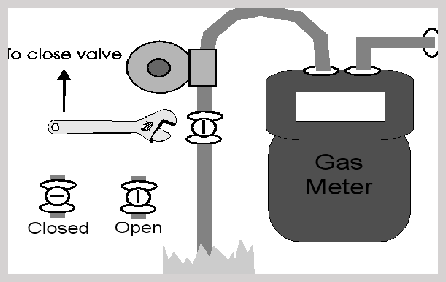
Gas leaks within premises: Trained and accredited personnel are available to install all the necessary internal pipe work to supply natural gas from the meter to appliances and other energy systems. Just as with the supply of gas up to the meter, there are codes of practice and authorized materials and installation methods for internal gas pipe work. Local gas utilities ensure through a variety of measures and programs that these high standards are upheld through the training and accreditation of technical installation personnel and companies. Utilities in most countries also have as a legal obligation not to connect or supply natural gas to premises that do not comply with these internal gas pipe work standards.
Technical Guidance to Builders, Architects and Estate Developers: Natural gas supply companies provide comprehensive technical guidance and support to architects, estate developers and builders on the construction of estate gas supply networks and various building regulations relating to the proper installation and use of natural gas pipe work and appliances in all types of building. In most countries such natural gas building regulations are also legal rules and regulations and are subject to scrutiny by local Council Building Inspectors.
Technicians on call by customers: Most utilities maintain a large number of mobile technicians who are on call 24 hours a day to respond to customer's problems and concerns.
Emergency Preparedness: Gas utilities take part in local emergency preparedness activities, programs and drills working closely with local emergency response bodies, Fire Departments and the general public.